
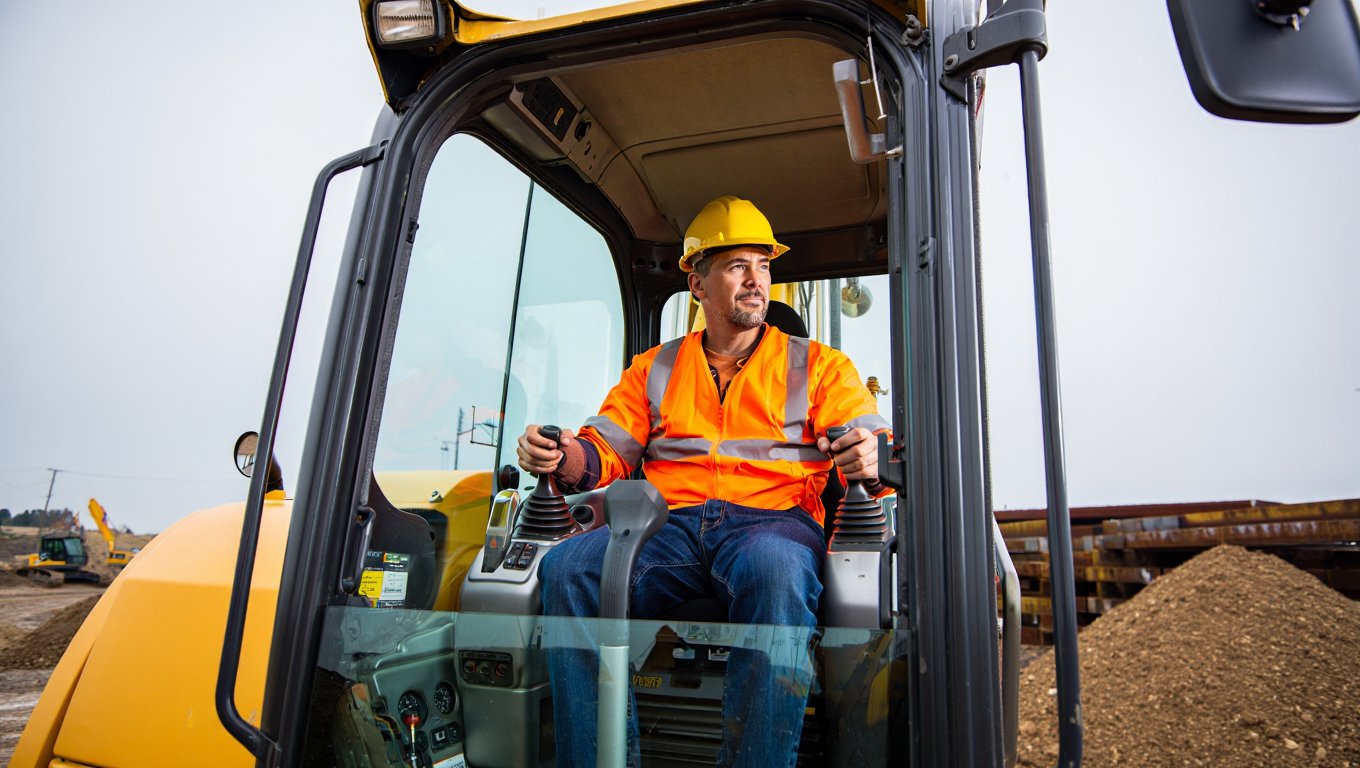
Heavy equipment operators are the people behind the machines that make modern construction possible. When a site needs to be cleared, graded, excavated, compacted, paved, or lifted into place, operators handle the work that sets the pace for the entire project. They run dozers, excavators, loaders, graders, backhoes, compactors, and other powerful machines that move massive materials with precision.
From the outside, the job can look like “just driving equipment.” On a real job site, it is much more than that. A good operator must understand ground conditions, read the work area, communicate with crews, and keep safety at the center of every movement. When an operator is strong, work flows smoothly. When an operator is careless, productivity drops and risk rises fast.
This guide explains what heavy equipment operators do, what the day-to-day work feels like, how to get trained, what employers look for, and how to start even if you have no experience.
What heavy equipment operators actually do
Heavy equipment operators control machines used in construction, roadwork, utility projects, and site development. Their job is to move earth, material, and equipment efficiently and safely while meeting the plan for the project.
On a typical day, an operator may start by reviewing the work plan with a foreman or superintendent. They need to understand what the goal is for that day. For example, are they cutting grade, building up base, trenching for utilities, loading trucks, or shaping slopes for drainage. Operators often work from stakes, marks, grade checks, and crew instructions.
Before operating, equipment inspection is part of the routine. Operators check fluids, tires or tracks, attachments, lights, backup alarms, and visible wear. Small problems can become expensive or dangerous if ignored.
During the work itself, operators must maintain awareness of people, trucks, spotters, and changing site conditions. They may be working near underground utilities, near traffic, near overhead hazards, or in tight spaces where a small mistake can damage property or injure someone. They also coordinate with ground crews using radios or hand signals to keep movement controlled and predictable.
After operating, operators often help with basic cleaning and upkeep, report mechanical issues, and prepare the equipment for the next shift.
Common equipment types and operator specialties
The term “heavy equipment operator” covers a wide range of machines. Some operators can run almost anything on the yard. Others focus on one or two machines and become highly specialized.
Excavator operators handle trenching, digging, lifting, and precision work. They often work near utilities and must be careful with depth, slope, and bucket control.
Bulldozer operators move and push material, shape rough grade, and support clearing work. Their work is often the foundation for what follows.
Grader operators are known for precision. Fine grading is a skill that takes time to master because it involves small adjustments that affect the entire surface.
Loader operators often work fast, moving aggregate, soil, demolition debris, or stockpiled materials while loading trucks efficiently.
Compaction and paving operators support roadwork and site prep where finish quality matters.
Over time, many operators build a “core machine” they are best at, then expand into other machines as opportunities appear.
What the job is really like day to day
Heavy equipment operation is a mix of physical and mental demands. You may not be lifting constantly like some trades, but you are still working in a physically real environment. There can be long shifts, weather exposure, dust, noise, vibration, and repetitive movement. You climb in and out of equipment, you work around moving vehicles, and you stay alert for hours at a time.
The mental focus is often what surprises new operators. You cannot drift mentally the way you might in some jobs. You must constantly track hazards, watch for people entering your zone, check your blind spots, monitor the machine’s response, and adjust to ground conditions.
If you enjoy hands-on work, visible progress, and real responsibility, you may find the job satisfying. If you dislike noise, dust, early starts, or outdoor conditions, it can be a difficult fit.
Why heavy equipment operators are valuable on job sites
Operators do not just “move dirt.” They influence project speed, cost, and safety. A skilled operator can reduce rework by cutting grade accurately the first time. They can protect equipment by operating smoothly rather than abusing the machine. They can help keep trucks moving by loading efficiently. They can protect the crew by maintaining clear zones and communicating consistently.
Many foremen would rather have one excellent operator than two average ones. That is why operators who show strong safety habits and steady productivity tend to stay employed, even when markets slow.
Skills employers look for in a strong operator
Employers typically look for a combination of technical control and job site behavior.
Coordination matters because you are controlling multiple inputs at once. You need smooth hands, steady feet, and the ability to make small adjustments under pressure.
Mechanical awareness matters because operators are often the first to notice when something feels off. Knowing the basics of equipment systems helps you prevent breakdowns and avoid unsafe operation.
Spatial awareness matters because machines have blind spots and swing radius risks. Operators must constantly visualize what the machine is doing in relation to people and objects nearby.
Communication matters because equipment work is team work. If you ignore spotters, fail to confirm instructions, or assume others can “read your mind,” you create risk.
Professional habits matter too. Showing up early, respecting the chain of command, keeping your area clean, and treating the machine like expensive equipment instead of a toy are the behaviors that build trust fast.
Training paths that actually work
There is no single best way to become a heavy equipment operator. The best path depends on your location, your finances, and how quickly you need to start earning.
Starting through entry-level construction work
Many operators begin as general laborers or site helpers. This route can be slower, but it is a real path because it puts you close to equipment and crews. A reliable worker who shows interest may get small opportunities, starting with tasks like spotter work, equipment cleaning, and basic yard support. Over time, that can lead to seat time on smaller machines and eventually larger ones.
This path works best when you are consistent and patient. A company will not put you in a machine until they trust you.
Apprenticeships and structured operator training
In many regions, apprenticeships and formal operator programs provide structured skill development. These pathways are often respected by employers because they show you learned in a controlled system rather than guessing your way through.
If you can access a structured program that includes real seat time and safety discipline, it can accelerate your progress and give you clearer credibility.
Equipment operator schools and short programs
Some people choose equipment schools to build fundamentals. These programs can help if they provide meaningful machine time and realistic scenarios. The key is to be careful when choosing. A program that is mostly classroom with minimal actual operating time will not prepare you for real work.
A good program teaches machine controls, daily inspections, basic grade concepts, safety zones, and communication practices. It should also help you understand job site culture, because technical skill without professional behavior will not get you hired.
Licenses, certifications, and what matters most
Requirements vary by region and by the type of work. Some jobs require specific tickets or endorsements, especially when hauling equipment, operating on public roads, or working under certain project standards.
That said, the most valuable “certification” on many job sites is a reputation for safe operation. If you have formal training, include it. If you have safety training, include it. If you have experience with certain machines, list it honestly.
Do not claim you can run equipment you have never touched. Most crews can tell quickly whether someone is real or bluffing, and bluffing can get you removed from the site.
How to get hired with no experience
If you are starting from zero, your strategy should be to get close to the machines, prove reliability, and earn trust.
Target entry roles that put you around equipment and civil crews. Look for jobs like construction laborer, grade crew helper, equipment yard assistant, site support, or material handler for an earthmoving contractor. These roles may not sound glamorous, but they build the foundation that leads to operator opportunities.
On your resume, highlight experience that proves you can handle early starts, physical work, outdoor environments, and safety rules. Warehouse work, landscaping, delivery, and industrial roles often translate well. If you have any exposure to forklifts, skid steers, or small equipment, list it clearly, but keep it honest.
In interviews, focus on teachability and safety. Employers hire beginners when they believe the person will learn without being reckless. A calm attitude, clear communication, and a respect for procedures can be more valuable than a flashy story.
How to succeed in your first month as a new operator
If you get a chance to operate, treat it like a privilege you must protect.
Show up early. Do inspections properly. Ask questions when unsure. Never rush to impress people with speed. Focus on smooth, controlled operation and staying aware of your surroundings.
Work well with spotters. Confirm signals. Keep eye contact when possible. Stop if you lose sight of the spotter. These habits prevent accidents and show maturity.
Be willing to do support work too. New operators often still do labor tasks. That is normal. The crews that advance fastest are usually the ones who help wherever needed while building skill steadily.
Bottom line
Heavy equipment operators play a central role in construction because they control machines that move the project forward. The career can be stable and rewarding for people who value hands-on work, responsibility, and skill growth. The best path is the one that gives you real seat time, strong safety habits, and a reputation for reliability.