

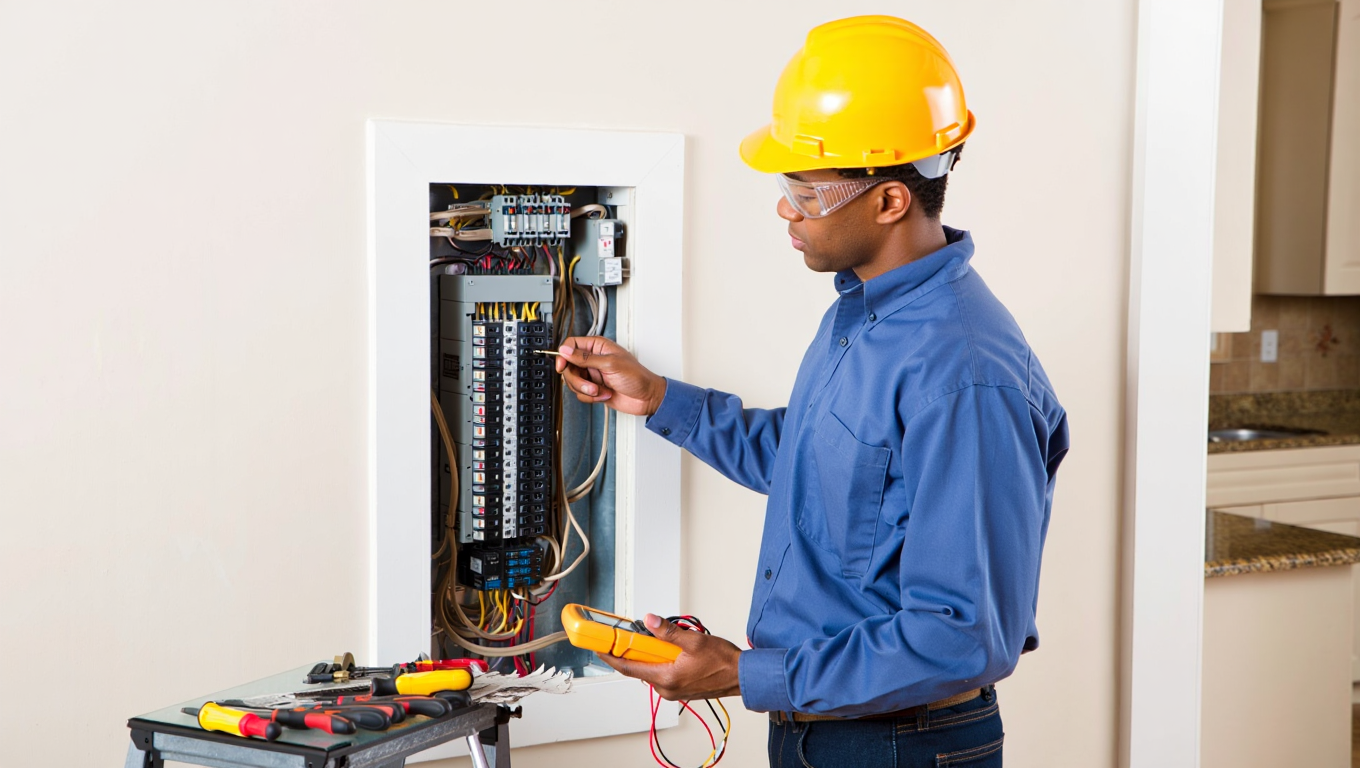
Electricians keep modern life running. Power in homes, lighting in offices, control systems in factories, and the wiring behind nearly every device all depend on trained electrical workers. When the work is done correctly, everything works quietly in the background. When the work is done incorrectly, the results can be dangerous, expensive, and sometimes life-threatening. That is why electricians are among the most respected and regulated trades in many regions.
If you are considering a career as an electrician, you are looking at a role that blends hands-on work with technical thinking. It is also a trade with clear progression. You start as a helper or apprentice, learn the fundamentals step by step, and move toward journeyman and higher responsibility roles. Many electricians later specialize in areas like industrial controls, service work, or high-voltage systems.
This guide explains what electricians do, the types of electrician roles, what a day in the trade looks like, how training works, what employers look for, and how to start even if you have no experience.
What electricians actually do
Electricians install, maintain, and repair electrical power, communications, lighting, and control systems. In practical terms, the job includes running cable, bending and installing conduit, wiring panels, installing switches and fixtures, troubleshooting faults, testing systems, and ensuring everything meets code and safety standards.
An electrician’s day often begins by reviewing plans, work orders, or the task list with a foreman. On construction sites, electricians coordinate with other trades because electrical work must be sequenced correctly. You cannot wire finished walls if the framing is incomplete. You cannot install fixtures until ceilings are ready. You cannot energize systems until inspections are passed.
On service calls, the work often involves diagnosis and customer communication. A service electrician might respond to a tripped breaker that will not reset, a faulty outlet, a lighting issue, or equipment that has lost power. Troubleshooting requires calm thinking, safe testing practices, and the ability to isolate the real cause of the problem rather than guessing.
Electricians also do a lot of preparation and organization. Tools must be ready, materials must be staged, panels must be labeled, and runs must be planned. Skilled electricians are often the ones who think ahead and prevent problems before they occur.
Main types of electricians and where they work
Electrician work is not one category. The type of work you do depends on the sector you enter and the company you join.
Residential electricians
Residential electricians typically work on houses, apartments, and small multi-unit builds. They install wiring for outlets, switches, lighting, appliances, panels, and sometimes home automation systems. Residential work often moves quickly, requires efficiency, and involves working in tight spaces, attics, or crawl spaces.
Residential work can be a strong entry point because it teaches fundamentals fast. It also often involves a lot of rough-in and trim-out repetition, which helps beginners build confidence.
Commercial electricians
Commercial electricians work on offices, retail buildings, schools, hospitals, and larger structures. Commercial work often involves conduit runs, more complex panel work, and larger systems. It can require stronger blueprint reading and coordination because many trades are working in the same space.
Commercial work often includes strict schedules and inspections. It can be a strong long-term path for people who like structured systems and larger projects.
Industrial electricians
Industrial electricians work in factories, plants, and industrial facilities where equipment and control systems are central. They may work with motors, variable frequency drives, control panels, sensors, and automation systems. Troubleshooting is a major part of industrial work, and safety procedures can be strict due to high energy hazards.
Industrial work is often considered more technical, and it can offer strong growth for electricians who like problem solving and systems thinking.
Maintenance electricians
Maintenance electricians focus on keeping systems running. They may work in facilities like hospitals, schools, warehouses, and manufacturing sites. The work can include preventive maintenance, repairs, and emergency troubleshooting. It is often less tied to new construction and more about reliability and response.
Maintenance roles can be attractive for people who prefer stability and a consistent site rather than moving from project to project.
Why electrical work requires strong safety discipline
Electricity is unforgiving. Electrical hazards include shock, arc flash, burns, and fire. Safety is not a slogan in this trade. It is a daily practice.
A professional electrician uses proper PPE, follows lockout and tagout procedures when required, tests before touching, uses insulated tools when appropriate, and never assumes a circuit is dead without verification. Good electricians also keep their work neat and organized because messy wiring and poor labeling create future hazards.
This safety focus is part of why apprenticeships and licensing requirements exist. The industry must ensure that people who work with electricity have proven competence, not just confidence.
The training path to become an electrician
Most electricians follow a structured progression, even if the details vary by region.
Starting as a helper or entry level worker
Some people start as helpers. They may carry materials, stage tools, drill holes, pull cable, install supports, and assist apprentices or journeymen. This role is a common entry point for people with no experience. The goal is to learn job site habits and prove reliability until you can move into an apprenticeship track.
Apprenticeships
Apprenticeships are the most common long-term training path. As an apprentice, you work under supervision while also completing classroom instruction. You learn electrical theory, code basics, safe work practices, and practical installation skills. Over time, you take on more complex tasks and build the hours required to move toward journeyman status.
Apprenticeships may be union or non-union depending on your area. The core idea is the same: paid learning with structured progression.
Trade school or technical programs
Some people begin with trade school, especially if they want a foundation in electrical theory and hands-on lab practice. Trade school can help you feel more confident on day one and may improve your chances of getting an apprenticeship. It is most valuable when it includes real practical work and helps you connect to employers.
Trade school is often not a replacement for apprenticeship hours, but it can be a strong support step depending on local requirements.
What employers look for in a beginner
If you are applying for your first electrical role, employers are looking for reliability and teachability more than deep skill.
They want someone who shows up on time every day, follows safety rules, learns quickly, and takes direction well. They also value people who can work carefully. Electrical work requires attention to detail. Rushing creates mistakes that cost time and create hazards.
You can show job readiness even without experience by highlighting transferable skills from other work. Warehousing, construction labor, maintenance, and even fast-paced service roles can prove that you can handle schedules, teamwork, and safety procedures.
If you have any exposure to tools, basic wiring projects, or technical training, you can mention it, but keep it honest. A good employer can train a true beginner. They cannot fix dishonesty.
Skills that help you advance faster
Electricians who advance quickly often share these habits.
They learn to read plans and understand layouts. They measure and mark accurately. They label panels and circuits cleanly. They keep their work neat and organized. They ask questions early instead of guessing. They take notes and remember what they learn so they do not repeat the same mistakes.
They also develop strong troubleshooting thinking. Instead of swapping parts randomly, they learn to test and isolate the issue. That mindset becomes valuable in every segment of electrical work.
Another major skill is communication. Electricians work around other trades, inspectors, and clients. Clear communication prevents conflict and protects the schedule.
Common mistakes new electricians should avoid
Beginners often fail not because they are incapable, but because they break trust.
Being late or inconsistent is a major problem. Electrical crews depend on coordination and early starts.
Ignoring safety steps or acting careless around live systems is another. One unsafe action can end a career instantly.
Pretending you understand instructions when you do not can cause hidden defects. It is better to ask than to guess.
Being disorganized also hurts. If you constantly lose tools, misplace materials, or leave a messy workspace, the crew will see you as a risk.
The best beginners are calm, careful, and consistent.
Career growth and specialization
Electricians have many growth options.
You can move from apprentice to journeyman, then become a lead, foreman, or supervisor. You can specialize in service work, industrial controls, automation, fire alarm systems, low-voltage systems, or high-voltage work depending on your region and experience.
Some electricians move into estimating, project management, safety roles, or inspection roles. Others start their own businesses, especially in residential or service markets.
The path is built on competence and trust. Each step up involves more responsibility, more decision-making, and more accountability.
Bottom line
Electricians play a critical role in modern life because they install and maintain the systems that provide power, lighting, and control. The trade rewards people who combine hands-on skill with careful thinking and strong safety discipline. If you want to start, the best approach is to pursue a helper or apprenticeship path, build reliable habits, learn continuously, and let your competence grow step by step.