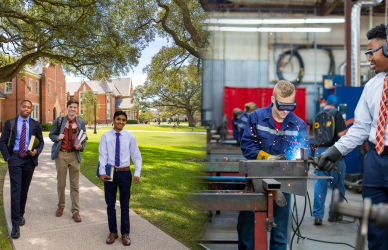


Trade careers are built through training that is practical, hands-on, and connected to real work. Unlike many office roles where a degree is the main gatekeeper, the trades usually care most about whether you can work safely, learn quickly, and perform consistently in the field. That is why training opportunities in the trades can look very different from traditional education. Some options pay you while you learn. Others cost money but can help you get job-ready faster. The best path depends on your timeline, your budget, and the trade you want to enter.
This guide breaks down the most common job training opportunities in the trades, how each one works, where to find them, and how to choose wisely so your training actually leads to a job.
Start by choosing a trade direction before choosing a program
The biggest mistake people make is enrolling in training without a target. “Trades” is a wide world. Electrician, plumbing, HVAC, welding, carpentry, heavy equipment, trucking, and industrial maintenance all require different skills and different entry steps.
Before you sign up for anything, decide which direction fits your interests and lifestyle. Ask yourself a few practical questions. Do you want to build new systems or troubleshoot repairs. Do you prefer indoor work or outdoor work. Are you comfortable with heights, confined spaces, or physical lifting. Do you want steady local work or travel options.
Once you have a direction, training choices become clearer because you can evaluate programs based on what employers in that trade actually want.
Apprenticeships: the strongest earn-while-you-learn option
An apprenticeship is one of the most respected training paths because it combines paid work with structured learning. You gain hours in the field while also learning theory, code, and best practices.
Apprenticeships usually last multiple years depending on the trade. You begin with basic tasks and gradually take on more responsibility. Your pay typically increases as you progress through defined stages.
Apprenticeships exist in union and non-union settings. Union apprenticeships often have well-defined training structures and clear wage progression. Non-union apprenticeships can be excellent too, especially with established contractors who invest in training and keep strong standards.
Apprenticeships are ideal if you want a long-term career path with recognized experience. They can be competitive, so preparation matters. Being reliable, having basic math confidence, and showing a serious interest in the trade can improve your chances.
Pre apprenticeship programs: a bridge for beginners
Pre apprenticeship programs are designed for people who are new and need job readiness before stepping into an apprenticeship or entry-level trade job. These programs can help you learn safety basics, tool familiarity, construction math, and job site expectations.
The value of a pre apprenticeship depends on one key factor: whether it connects to real employers or apprenticeship placement. The best programs have relationships with contractors and unions and can guide you directly into interviews or apprenticeship applications. Weak programs teach general information but leave you without a clear job pipeline.
If you are brand new or switching careers, a strong pre apprenticeship can be a smart way to build confidence and avoid early mistakes that can get you removed from a crew.
Community college and technical college certificates: affordable and practical when chosen carefully
Many community colleges offer trade certificates in areas like HVAC, welding, electrical technology, industrial maintenance, and construction management. This can be a strong option because costs are often lower than private schools, and programs may have good local employer connections.
A good certificate program is hands-on. It includes lab time, real tools, realistic tasks, and instructors with real industry experience. It also helps with placement, either through internships, employer relationships, or career services that are actually connected to trade hiring.
If a program is mostly lecture-based with limited hands-on time, it may not prepare you for job site reality. Trade skills are built through repetition and practice, not only classroom learning.
Trade schools: fast skill-building for some trades, but outcomes depend on quality
Private trade schools can be helpful, especially when they provide heavy hands-on practice and strong job placement. This is common in welding, HVAC, and some electrical and automotive programs. The main advantage is speed and structure. Programs are often designed to get you job-ready quickly.
The downside is cost. Private programs can be expensive, and the quality varies widely. Some schools produce job-ready graduates. Others produce graduates who still cannot pass a basic skills test.
If you consider a trade school, treat it like a business decision. Ask how much time is hands-on. Ask what equipment you will use. Ask what certifications you graduate with. Ask where recent graduates are working. Ask about placement rate, but also ask what kinds of jobs they get, because a job is not always a good job.
Employer-sponsored training: get hired first, then learn
Some companies hire beginners and train them internally. This is common in maintenance roles, utilities, manufacturing, and certain construction contractors that want long-term employees.
Employer training can be a great route because you start earning immediately and you learn the company’s way of doing things. Some employers also pay for certifications or classroom training as you advance.
This route works best when the employer has a real training culture. If a company says they will train but has no plan, you may end up stuck doing low-level tasks without real progression. In interviews, ask how training works, what the first 30 to 90 days look like, and how people move up.
Workforce development programs and grants: help with funding and placement
Many regions have workforce development organizations that support training for in-demand jobs. These programs can help with tuition assistance, equipment costs, and placement support. They may also connect candidates directly to approved programs or employers.
This option can be especially helpful if you are unemployed, underemployed, or changing careers. The key is to be specific about your goal. Ask for skilled trades pathways and funding options tied to those pathways.
Workforce support can also include resume help, interview preparation, and job matching, which can speed up your first hire.
Short certifications: small steps that open doors
In the trades, some short certifications can help you get hired faster because they reduce employer risk. Safety training, first aid, equipment operation credentials, and other entry-level certificates can help you stand out when you have no experience.
The best approach is to check job postings in your area and see what requirements repeat. If employers mention a specific safety card or equipment training often, that credential may be worth getting early.
Do not overload yourself with certifications. One or two relevant credentials plus strong reliability can be more valuable than a stack of unrelated cards.
How to choose the right training opportunity
Choosing the best training is about matching your situation to the path that leads to employability.
If you need income immediately, apprenticeship and employer training are often best. If you can invest time in structured learning, a community college certificate or strong trade school program can build skills quickly. If you are brand new and want a guided bridge, a pre apprenticeship can reduce early mistakes.
No matter the path, judge the program on three things. Hands-on training time, real employer connections, and clear outcomes. If a program cannot clearly explain where graduates work and how they get there, it is a warning sign.
Bottom line
Job training opportunities in the trades are strong because the trades are built around learning through practice. The best path is the one that gives you real skills, real safety habits, and a clear connection to real work. Apprenticeships and employer training are powerful because they pay you while you learn. Community college and quality trade schools can accelerate skill-building when they offer hands-on practice and placement. Workforce programs and short certifications can support your entry and reduce barriers.
If you choose intentionally and focus on employability, trade training can move you from interest to income faster than many traditional career paths.
Meta Title: College vs Trade School: Which Path Fits Your Goals, Budget, and Timeline
Meta Description: A practical comparison of college vs trade school, including costs, time, job outcomes, flexibility, earning potential, and who each path is best for.
URL Slug: college-vs-trade-school
Primary Keyword: college vs trade school
LSI Keywords: trade school vs college, skilled trades careers, career training options, apprenticeships, vocational training, job readiness
Meta Tags: college, trade school, career planning, education costs, apprenticeships, vocational training, skilled trades, earning potential, job outlook, decision guide
College vs Trade School: Which Path Fits Your Goals, Budget, and Timeline
Choosing between college and trade school is one of the biggest career decisions many people make. The truth is that neither option is automatically better. The best choice depends on what kind of work you want, how quickly you need to start earning, how much debt you can realistically handle, and how you learn best.
Some people thrive in academic settings and want careers where a degree is required. Others want hands-on work, faster training, and a clear skill-to-job connection. Many people also combine both, starting in a trade and later studying business or management, or starting in college and later switching to a trade path.
This guide compares college vs trade school in real-life terms so you can decide with clarity rather than pressure.
What college is designed to do
College is built to provide broad academic education plus specialization in a major. For many professions, a degree is the gatekeeper. Nursing, engineering, accounting, teaching, architecture, and many corporate roles often require a degree or strongly prefer one.
College can also help build critical thinking, writing, research skills, and long-term career flexibility. A degree may open doors to management tracks, professional licensing, or roles that are less physical over time.
However, college is not always tightly connected to job-ready skills. Many degrees teach concepts and theory, and the student must then translate that into practical job ability through internships, projects, and early career experience.
What trade school is designed to do
Trade school is built for practical skill training. The goal is to teach you how to do a specific job, often through hands-on practice. Trades like welding, HVAC, plumbing, electrical, machining, automotive repair, and equipment operation are skill-based. Employers need people who can perform tasks safely and correctly, not just talk about them.
Trade school is typically shorter than college. It often takes months rather than years. It is also more direct. You train for a specific job and you enter the workforce sooner.
Trade school does not always provide broad academic flexibility, but it often provides faster employability.
Timeline: how fast you can start earning
Timeline is one of the biggest differences.
College is commonly a multi-year commitment. Many degree programs take four years, and some fields require more education afterward. During that time, students may work part-time, but full career earnings usually start after graduation.
Trade school programs are often shorter. Some can be completed in under a year, and many lead directly into entry-level work. Apprenticeships can begin with earning right away, although wages increase as skills increase.
If you need income quickly, trade school or apprenticeship paths often fit better than a long college timeline.
Cost and debt: the part people underestimate
Cost matters because debt affects your life choices for years.
College can be expensive depending on the school and the support you receive. Some people graduate with manageable debt. Others graduate with heavy debt and a job that does not pay enough to make the monthly payments comfortable.
Trade school can also cost money, but it is often lower than a four-year degree. The shorter timeline can reduce total living expenses while studying, and you may earn sooner.
The key point is not that trade school is always cheap. It is that trade school often has a clearer return path because training is directly tied to a job skill. Still, you should evaluate any program’s costs against realistic starting wages in your area.
Learning style: how you personally learn best
Some people learn best through reading, lectures, and writing. Others learn best through hands-on practice and repetition.
College is more academic. Trade school is more tactile and skill-focused.
If you know you struggle in classroom-only environments, trade training may feel more natural. If you enjoy theory and long-term academic growth, college may fit better.
Your learning style matters because success depends on completing the program, not just enrolling.
Job outcomes: how each path connects to employment
A degree can open doors, but it does not guarantee job readiness. Many graduates still need internships, networking, and entry roles to build experience.
Trade school is often more directly tied to employment, but quality varies. A strong program has hands-on hours, relevant certifications, and employer connections. A weak program may leave you with limited skills and limited placement support.
Both paths work best when you build proof. In college that proof might be internships, projects, and a portfolio. In trades that proof might be certifications, apprenticeship hours, and hands-on competence.
Income and long-term growth: more than starting wage
People often compare college vs trade school by looking only at starting wage. That is not enough. You should also consider long-term growth.
Many trade careers increase earnings as you gain experience and licensing. A beginner starts lower, but a skilled worker with strong reputation can earn well, especially in specialized lanes or leadership roles.
College careers can also grow over time, especially in fields with clear advancement ladders. Some professional careers have high ceilings, but they may require additional education or licensing.
A smarter approach is to ask: what does the career look like at year five and year ten. What is the lifestyle. What is the stability. What is the flexibility.
Lifestyle and physical demands
Lifestyle is often ignored until it becomes the deciding factor.
Many trade jobs involve early starts, physical work, weather exposure, and job site environments. Some trades are physically demanding long-term. Others can be managed with good safety habits and movement practices, but the physical factor remains real.
Many degree-based office careers are less physical, but may involve long hours, screen fatigue, or high mental pressure. Stress can exist in both worlds, just in different forms.
If you want active work and do not want to sit all day, a trade can be a great fit. If you want less physical strain long-term, college career paths may align better.
Flexibility: switching paths later
One of the most useful truths is that you can change direction.
A trade career can evolve into business ownership, supervision, estimating, project management, and construction management. Many tradespeople later take business courses or certificates to support leadership roles.
A college graduate can also switch into trades if they decide they want hands-on work. The earlier you pivot, the easier it is, but it is always possible.
The best decision is the one that helps you move forward now while keeping future options open.
How to make the decision with clarity
To decide between college and trade school, answer these questions honestly.
What kind of work do I want to do most days. Hands-on building and fixing, or more analytical and office-based work.
How fast do I need to start earning.
How much debt can I realistically handle without stress.
Do I learn better through practice or theory.
Does my target career require a degree, licensing, or specific credentials.
What does the job look like long-term in my area.
When you answer these clearly, the choice usually becomes obvious.
Bottom line
College vs trade school is not a battle. It is a fit decision. College is a strong path when your target career requires a degree and you want broad academic growth. Trade school is a strong path when you want practical job-ready skills, faster entry into earning, and a clear skill-based career ladder. The best choice is the one that matches your goals, budget, timeline, and learning style, then you commit fully and build real proof of ability.