
Plumbers and pipe fitters are often grouped together because both work with piping systems, fittings, valves, and the movement of fluids. But they are not the same job, and the differences matter when you are choosing a career path. Plumbers typically focus on water supply, drainage, and fixtures in residential, commercial, and light industrial settings. Pipe fitters are more common in industrial and large commercial work, building systems that carry steam, chemicals, gases, and high pressure fluids, often as part of mechanical and process systems.
Both careers can be strong long-term paths because the work is essential and cannot be outsourced. Buildings will always need clean water, safe drainage, heating systems, and functional mechanical infrastructure. Industrial sites will always need process piping that is installed correctly, tested properly, and maintained safely. Whether you are considering your first trade job or looking to specialize after time in construction, plumbing and pipe fitting offer clear progression for people who take safety, learning, and craftsmanship seriously.
This guide explains what plumbers and pipe fitters do, how they differ, what day-to-day work looks like, how training works, and how to break in even if you have no experience.
Plumber vs pipe fitter: the real difference
The simplest way to understand the difference is to look at what is moving through the pipe and where the system is installed.
Plumbers mainly work on domestic water and waste systems. That includes hot and cold water lines, drainage, vent systems, and fixtures like sinks, toilets, tubs, water heaters, and backflow prevention. They may work in homes, apartment buildings, office buildings, schools, hospitals, and retail spaces. Plumbing is often tied to building codes, inspections, and customer-facing service work.
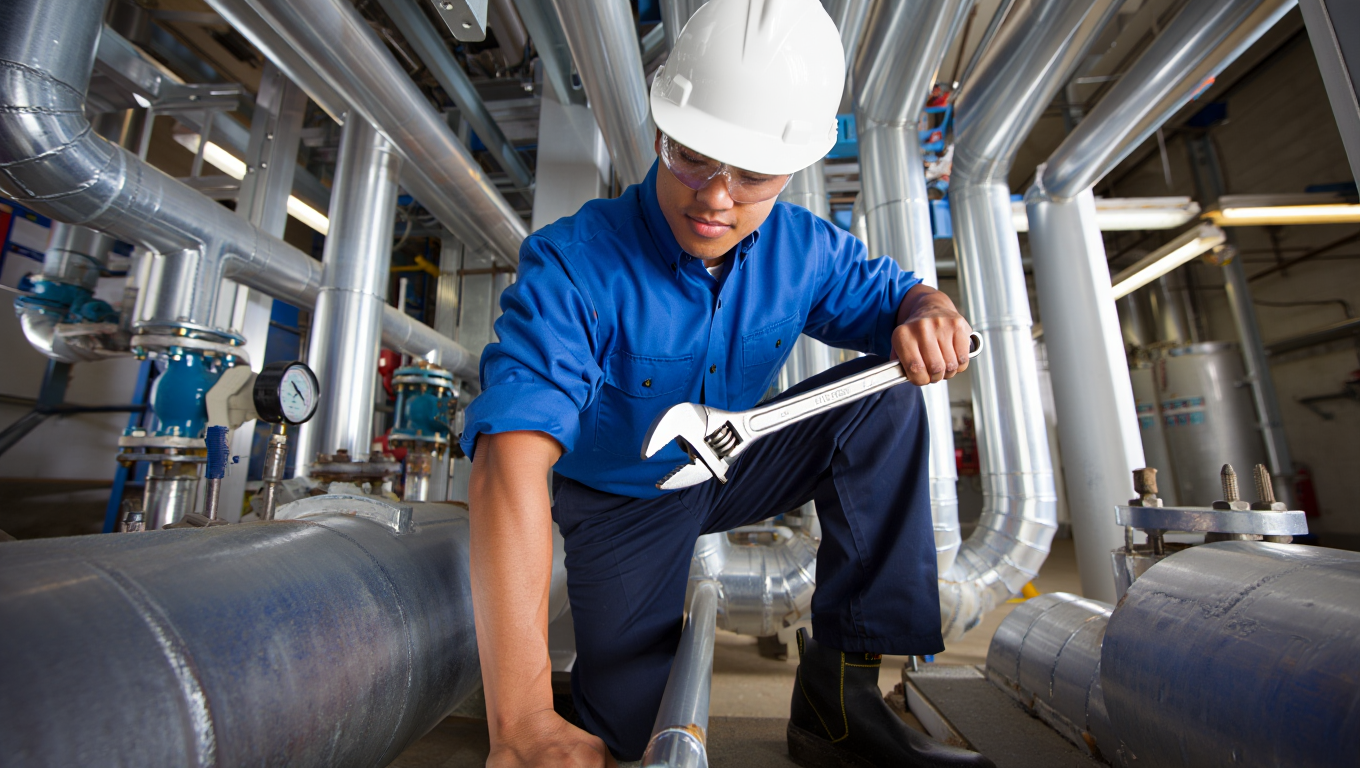
Pipe fitters usually work on mechanical piping systems, often in industrial facilities, power plants, refineries, large commercial buildings, and manufacturing sites. They install and maintain piping that can carry steam, chemicals, compressed air, gas, and other process materials. The systems can be high pressure, high temperature, and more technical. Pipe fitting often overlaps with welding, rigging, and mechanical contractor work.
There is also a related role called steamfitter in some regions, which focuses on systems that carry steam and hot liquids, especially for heating and industrial applications. The naming varies by location, but the core idea is the same: plumbers handle domestic plumbing systems, while pipe fitters handle mechanical and industrial piping.
What plumbers do day to day
A plumber’s daily work depends on whether they are doing new construction, commercial work, or service calls.
On new builds, plumbers do rough-in work first. Rough-in means installing pipes inside walls, floors, and ceilings before finishes go in. They lay out pipe runs, drill and cut pathways, install water supply lines, drainage lines, vents, and connect systems to the main line. Later, after walls are closed and finishes are installed, they do trim-out, which includes installing fixtures, connecting faucets, setting toilets, hooking up water heaters, and testing the system.
In commercial plumbing, plumbers may work on larger systems, higher volumes, and more complex layouts. The work often involves coordination with other trades, reading plans, and working under inspection schedules.
In service plumbing, the job becomes more customer-facing. A plumber may respond to leaks, clogs, broken water heaters, low water pressure, drain backups, fixture replacements, or emergency calls. Service work rewards troubleshooting skills and calm communication because the customer is often stressed and wants fast solutions.
Regardless of the setting, plumbers must understand slope and venting on drain systems, safe water supply installation, fixture standards, and code compliance. A small mistake can cause leaks, mold, water damage, and expensive repairs.
What pipe fitters do day to day
Pipe fitting often looks more industrial and technical.
Pipe fitters work with pipe spools, flanges, valves, fittings, supports, and hangers. They measure, cut, bevel, fit, align, and assemble pipe systems. They may work with steel, stainless steel, copper, and other materials depending on the application. Many pipe fitting roles overlap with welding or work closely with welders who complete final joints.
A pipe fitter’s day often includes reading isometric drawings, planning the run, setting supports, aligning flanges, ensuring correct orientation of valves, and verifying that the system meets specifications. The work can include pressure testing, hydro testing, and checking for leaks or alignment issues.
Pipe fitting also often includes shutdown work in industrial plants, which can involve tight timelines and strict safety rules. The environment may include confined spaces, elevated work, hot work permits, and coordination with many teams.
If plumbing is often about building comfort and hygiene, pipe fitting is often about industrial systems that must work safely under pressure and heat.
The skills that make you valuable in these trades
Plumbing and pipe fitting both reward people who combine physical skill with careful thinking.
Measurement and layout
You will measure constantly. A strong worker can measure accurately, visualize pipe routes, and plan steps in advance to avoid rework.
Tool comfort and mechanical mindset
You will use hand tools, power tools, cutters, threading tools, and installation tools depending on the job. A mechanical mindset helps you understand how components fit together and why failures happen.
Problem solving
Leaks, misalignments, unexpected obstacles inside walls, and old building surprises are common. The best tradespeople stay calm and solve problems logically instead of forcing parts to fit.
Communication and teamwork
These jobs rarely happen alone. You coordinate with foremen, other trades, inspectors, customers, and sometimes engineers. Clear communication prevents mistakes and keeps the schedule moving.
Safety discipline
Both plumbing and pipe fitting involve hazards. Sharp tools, heavy materials, lifting, confined spaces, and in industrial settings, pressure systems and hot work. Employers trust workers who follow procedures and do not take shortcuts.
Training paths that actually work
There are three common ways people enter plumbing and pipe fitting.
Starting as a helper
Many people start as a helper or laborer with a plumbing company or mechanical contractor. You might carry materials, prep work areas, stage tools, clean up, and assist with simple tasks while learning the basics. This is a direct path to experience, and it helps you learn job site culture quickly.
Helpers who advance fastest are reliable, pay attention, and ask smart questions at the right time. They learn the names of parts, the purpose of each component, and the reasons behind installation steps.
Apprenticeships
Apprenticeships are one of the strongest long-term paths. They combine paid work with structured training. You learn code basics, system design principles, safety practices, and hands-on installation. As you progress, you take on more responsibility and move toward journeyman level.
Apprenticeships are common in both union and non-union settings, depending on your region. The best apprentices treat the process like a professional development plan, not just a job.
Trade school and technical programs
Some people attend trade school or a certificate program before applying. This can be helpful if you want structured learning and a foundation in tools, safety, and systems. The best programs include hands-on lab time and real job readiness, not only classroom theory.
Trade school alone does not guarantee employment, but it can improve your confidence and help you stand out for entry roles.
What a beginner can do to get hired faster
If you have no experience, the goal is to reduce the risk for an employer. You want them to believe you will show up, learn, and work safely.
Start by choosing your direction. If you want residential or service work, aim for plumbing companies that do installs and repairs. If you want industrial work, look for mechanical contractors, pipe fitting crews, and industrial maintenance teams.
Then focus on practical readiness:
Show that your transportation is reliable and that you can handle early starts.
Learn basic tool safety and job site expectations.
Be ready to do entry-level tasks without complaining. Every skilled worker started with the basics.
On your resume, highlight any work that proves reliability and physical endurance. Warehousing, delivery, landscaping, maintenance, and construction support roles all translate well. If you have hands-on experience from personal projects, you can include a small projects section describing what you did and what tools you used.
In interviews, do not pretend you are experienced. Instead, explain why you want the trade, what you have done to prepare, and how you approach learning and safety. Employers often prefer an honest beginner who is serious over someone who exaggerates.
The tools and materials you will run into
Plumbers often work with copper, PEX, PVC, and cast iron depending on the system and region. You may use cutting tools, crimpers, soldering tools, wrenches, drain snakes, and testing tools.
Pipe fitters commonly work with steel and stainless steel piping and industrial fittings. You may see flange work, grooved systems, threaded pipe, and welded systems. The work can involve rigging, chain falls, and alignment tools for larger spools.
You do not need to own every tool on day one. Many companies provide major tools. As you grow, you gradually build your own kit based on what your employer expects.
Common mistakes new workers should avoid
Beginners often lose trust not because they lack skill, but because of habits.
Being late or unreliable is one of the fastest ways to get cut from a crew.
Not listening fully to instructions causes mistakes, rework, and safety issues.
Skipping safety steps to look fast is a serious problem in these trades. Speed without control is not respected.
Not asking questions when confused can lead to hidden failures, especially in plumbing where leaks may not show immediately, and in pipe fitting where misalignment can become a major issue during testing.
The best beginners are steady, curious, and careful.
Career growth and long-term opportunity
Both plumbing and pipe fitting offer clear progression.
You can move from helper to apprentice to journeyman. From there, you may become a lead, foreman, or supervisor. Some tradespeople move into estimating, project management, safety roles, or training. Others start their own businesses, especially in residential plumbing and service.
Pipe fitting can also lead into specialized industrial work, shutdown leadership roles, welding specialization, or mechanical systems supervision.
The path is simple in concept: learn the basics, be safe and reliable, build skill, and take on more responsibility. Over time, that responsibility becomes value.
Bottom line
Plumbers and pipe fitters both work with piping systems, but their environments and system types often differ. Plumbing focuses more on domestic water, drainage, and fixtures, while pipe fitting often focuses on industrial and mechanical systems under higher pressure and complexity. Both careers reward people who measure accurately, communicate well, take safety seriously, and stay reliable.